
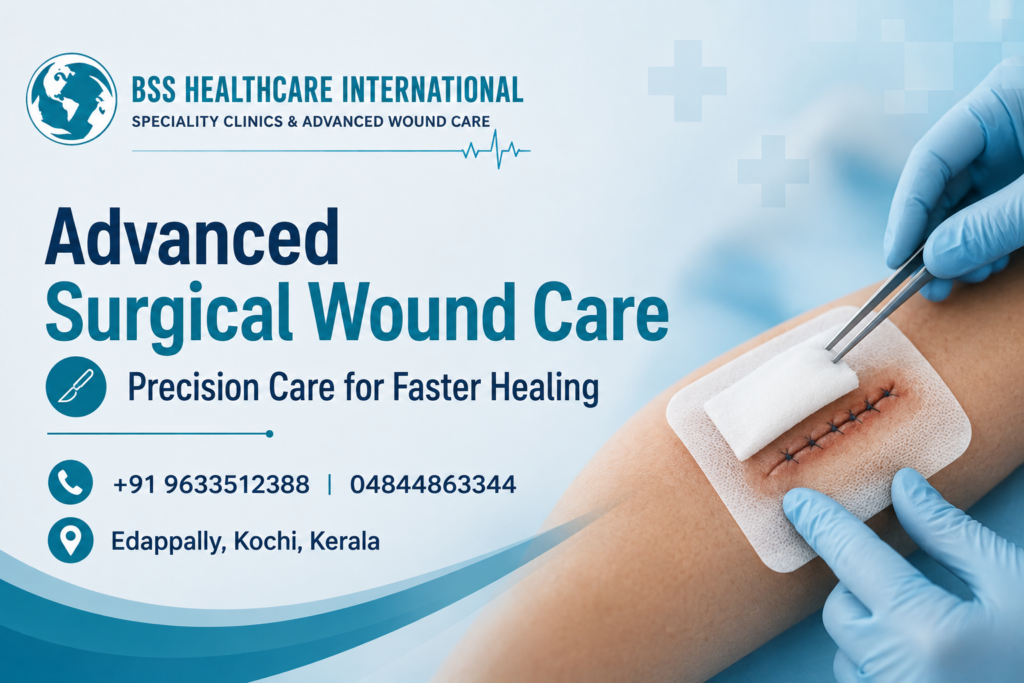
Advanced surgical wound care in Kerala, Kochi, is specialized treatment for surgical wounds that need more than routine dressing and basic postoperative care. It involves careful wound assessment, infection management, appropriate dressings, removal of unhealthy tissue when necessary, and advanced therapies selected according to the patient’s condition.
Most surgical wounds heal with proper postoperative care. However, some wounds may heal slowly or develop complications. Factors such as infection, diabetes, poor circulation, pressure, tissue damage, or other underlying health conditions can affect healing. In these situations, professional wound care can help identify the problem and create an appropriate treatment plan.
Why Is Advanced Surgical Wound Care Important?
A surgical wound needs proper care while the body repairs damaged tissue. Regular monitoring can help identify changes early and reduce the risk of complications.
Advanced wound care may be considered when a wound:
- Takes longer than expected to heal
- Shows signs of infection
- Produces persistent or unusual drainage
- Has damaged or unhealthy tissue
- Opens or separates after surgery
- Requires specialized dressings
- Occurs alongside diabetes or circulation problems
- Needs additional wound-healing support
The American College of Surgeons provides dedicated educational resources for patients recovering from surgical wounds, highlighting the importance of appropriate wound care after discharge.
What Does Advanced Surgical Wound Care Include?
Advanced wound care is not simply about changing a dressing. A healthcare professional first evaluates the wound and considers factors that may be affecting healing.
Depending on the wound, treatment may include:
Wound Assessment
The wound is examined for its size, depth, tissue condition, drainage, surrounding skin, and signs of infection. The patient’s medical history and other factors affecting healing may also be considered.
Specialized Wound Dressings
Different wounds require different types of dressings. A suitable dressing can help protect the wound, manage moisture and drainage, and support an appropriate healing environment.
Infection Management
If infection is suspected, professional assessment is important. Increasing redness, swelling, pain, warmth, pus, foul-smelling drainage, or fever can require medical evaluation.
Debridement
Some wounds contain dead or unhealthy tissue that may interfere with healing. When clinically appropriate, healthcare professionals may remove this tissue through a suitable debridement method.
Negative Pressure Wound Therapy
Negative pressure wound therapy, often called NPWT or wound VAC therapy, uses controlled suction on selected wounds. It can help manage wound fluid and support the wound-healing process in appropriate cases.
Oxygen Therapy
Certain wound-care programs may use oxygen-based therapies as part of a broader treatment plan. Whether this is appropriate depends on the patient’s wound and overall medical condition.
Who May Need Surgical Wound Care in Kochi?
Not every patient who has undergone surgery needs advanced wound treatment. However, specialist wound assessment may be useful when healing is delayed or complications develop.
People who may benefit from professional wound evaluation include those with:
- Non-healing surgical wounds
- Postoperative wound infections
- Diabetes-related wound problems
- Poor circulation
- Complex or deep wounds
- Wound separation
- Excessive wound drainage
- Pressure-related wounds
- Previous problems with wound healing
- Other chronic or difficult-to-heal wounds
Advanced wound-care services in Kochi also address chronic and non-healing ulcers associated with conditions such as diabetes, venous problems, arterial disease, and other underlying conditions.
What Are the Warning Signs of a Surgical Wound Problem?
Knowing what to look for after surgery is important.
Contact your healthcare professional if you notice:
- Increasing redness around the wound
- Increasing swelling
- Worsening pain
- Pus or unusual discharge
- Bad smell from the wound
- Persistent bleeding
- Fever or chills
- The wound edges separating
- Increasing wound size or depth
- Skin around the wound becoming increasingly warm or painful
A wound that appears to be getting worse instead of gradually improving should be assessed by a qualified healthcare professional.
How Can You Support Surgical Wound Healing at Home?
Professional treatment is only one part of wound recovery. Following postoperative instructions at home is also important.
Follow these basic precautions:
- Wash your hands before touching the wound or dressing.
- Change dressings only as instructed.
- Keep the wound protected according to your healthcare provider’s advice.
- Avoid touching or scratching the wound unnecessarily.
- Do not apply creams, powders, oils, herbal products, or antibiotics without professional advice.
- Follow medication instructions carefully.
- Attend scheduled follow-up appointments.
- Report unusual changes in the wound promptly.
The exact instructions can vary depending on the surgery and wound condition, so your surgeon or wound-care professional’s instructions should take priority.
What Makes Advanced Wound Care Different From Regular Dressing?
Regular dressing is an important part of wound care, but advanced wound management can involve a broader clinical assessment.
Regular wound dressing may focus mainly on cleaning and covering the wound.
Advanced wound care may involve:
- Detailed wound assessment
- Identifying factors delaying healing
- Specialized dressing selection
- Infection assessment and management
- Debridement when required
- Management of complex wounds
- Advanced therapies such as NPWT when appropriate
- Regular monitoring of healing progress
- Coordinated care for underlying conditions
This approach is particularly relevant when a wound is complex or does not respond adequately to routine treatment.
Why Consider Advanced Surgical Wound Care in Kochi?
For patients searching for advanced surgical wound care in Kerala, Kochi, access to specialized wound management can make ongoing care easier and more coordinated.
BSS Healthcare International’s Advanced Wound Care Centre in Kochi focuses on specialized wound management. Its services are intended for surgical and other complex wounds requiring professional assessment and treatment.
The availability of advanced wound-care services is particularly useful for patients who need continued monitoring after surgery or who are experiencing delayed healing.
When Should You See a Wound Care Specialist?
You should consider professional wound assessment if your surgical wound is not healing as expected or if you notice symptoms that concern you.
Seek medical advice promptly if you experience increasing pain, swelling, redness, pus, foul-smelling drainage, fever, bleeding, or wound separation.
Do not try to manage a complicated or infected surgical wound entirely on your own. Early professional assessment can help determine what is causing the problem and what treatment is appropriate.
Frequently Asked Questions About Advanced Surgical Wound Care
1. What is advanced surgical wound care?
Advanced surgical wound care is specialized management for surgical wounds that are delayed, infected, complex, or otherwise require more than routine postoperative dressing.
2. How long does a surgical wound take to heal?
Healing time varies depending on the type and location of surgery, wound size, patient’s health, and other factors. Your surgeon or wound-care professional can provide a more specific estimate.
3. When should I worry about a surgical wound?
Increasing redness, swelling, pain, pus, unusual drainage, fever, foul smell, bleeding, or wound separation can be warning signs that require medical evaluation.
4. Can diabetes affect surgical wound healing?
Yes. Diabetes can be associated with wound-healing difficulties, particularly when blood glucose and other contributing factors are not well controlled. People with diabetes may benefit from closer wound monitoring.
5. What is NPWT?
NPWT stands for Negative Pressure Wound Therapy. It uses controlled suction to manage selected wounds and can support wound management in appropriate patients.
6. Is advanced wound care only for surgical wounds?
No. Advanced wound-care services can also be used for selected chronic and complex wounds, including diabetic foot wounds, pressure injuries, burns, and other non-healing wounds.
7. Where can I get advanced surgical wound care in Kochi?
Patients looking for advanced surgical wound care in Kerala, Kochi can consult a qualified wound-care professional or specialized wound-care centre for assessment and treatment based on their individual condition.
Conclusion
A surgical wound deserves careful attention throughout the recovery process. While many wounds heal normally with routine postoperative care, some require specialized treatment because of infection, delayed healing, diabetes, poor circulation, tissue damage, or other complications.
Advanced surgical wound care in Kerala, Kochi combines professional wound assessment, appropriate dressing techniques, infection management, and advanced treatment options when clinically required. The goal is to create the right conditions for healing while addressing factors that may be preventing recovery.
If you are experiencing a non-healing or complicated surgical wound, consult a qualified healthcare professional rather than relying on self-treatment. A timely assessment can help determine the most appropriate care for your wound.
Medical Disclaimer: This article is for general educational purposes only. It does not replace diagnosis, treatment, or advice from a qualified doctor or wound-care professional. Surgical wounds should be evaluated individually, especially when signs of infection or delayed healing are present.