
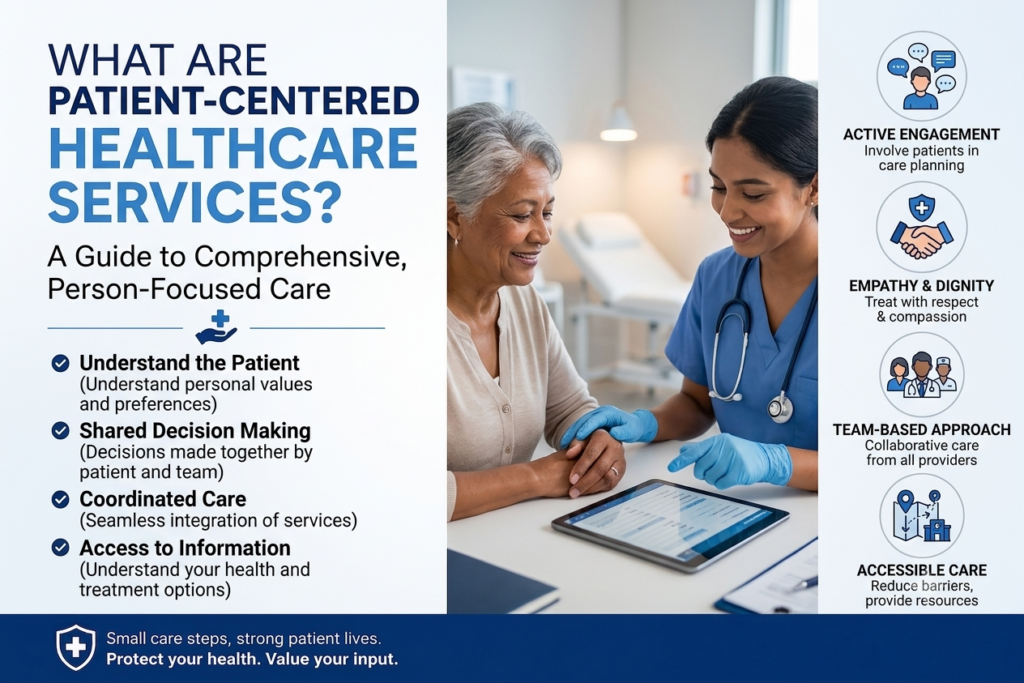
Choosing the right healthcare service is an important decision for every family. Healthcare is not only about treating an illness; it is also about understanding the patient’s needs, providing emotional support, maintaining comfort, and helping families make informed decisions. This is where Patient-Centered Healthcare Services in Kerala, Kochi can play an important role.
Patient-centered healthcare focuses on the individual rather than treating every patient in exactly the same way. It considers a person’s health requirements, preferences, lifestyle, comfort, family situation, and goals while planning and delivering care.
What Are Patient-Centered Healthcare Services?
Patient-centered healthcare is an approach in which patients and their families are actively involved in healthcare decisions. Instead of focusing only on a diagnosis or medical procedure, healthcare professionals consider the complete needs of the individual.
For example, an elderly patient recovering after hospitalization may need more than medical monitoring. They may also require assistance with daily activities, proper nutrition, medication support, emotional encouragement, and communication with family members.
A patient-centered approach brings these different needs together to provide more personalized care.
Why Is Patient-Centered Care Important?
Every patient is different. Two people with the same health condition may have completely different lifestyles, concerns, abilities, and recovery requirements.
Patient-centered care can help by:
- Understanding individual healthcare requirements
- Encouraging patients to participate in decisions
- Improving communication between patients and healthcare professionals
- Supporting patient comfort and dignity
- Helping families understand care requirements
- Coordinating different aspects of healthcare
- Providing care according to individual circumstances
The goal is to make the patient an active participant in their healthcare journey rather than simply a recipient of treatment.
How Can Families Choose the Right Healthcare Services?
Finding suitable healthcare services can sometimes be challenging, particularly when a family member requires regular or long-term support. Families should consider several factors before selecting a healthcare provider.
1. Understand the Patient’s Requirements
First, identify what type of healthcare support is needed. Depending on the patient’s condition, this could include elderly care, post-hospitalization care, chronic disease support, rehabilitation, wound care, medication assistance, or general health monitoring.
Understanding the exact requirement makes it easier to find an appropriate service.
2. Look for Qualified Healthcare Professionals
The quality of care depends greatly on the people providing it. Families should consider the qualifications, experience, training, and responsibilities of the healthcare professionals involved.
It is also useful to understand who will coordinate the patient’s care and how families can communicate with the care team.
3. Consider Personalized Care Plans
A good healthcare service should recognize that every patient has different needs. Ask whether the provider develops a care plan according to the patient’s health condition, daily routine, preferences, and family requirements.
Personalized care can be particularly valuable for elderly individuals, patients recovering at home, and people managing long-term health conditions.
4. Check Communication and Availability
Communication is an important part of patient-centered healthcare. Families should feel comfortable asking questions and discussing concerns with healthcare professionals.
Before choosing a service, families can ask:
- How can we contact the care team?
- How are changes in the patient’s condition communicated?
- Who should the family contact in an emergency?
- How frequently is the care plan reviewed?
- Can the service adapt when the patient’s needs change?
Clear communication can help families feel more confident about the care being provided.
What Are the Benefits of Patient-Centered Healthcare?
The benefits can extend beyond medical treatment. When healthcare is organized around the patient’s individual needs, patients may feel more respected, heard, and involved in decisions about their care.
Important benefits include:
Better communication: Patients and families can better understand healthcare plans and expectations.
Greater involvement: Patients can participate in decisions about their care whenever appropriate.
Personalized support: Care can be adapted to individual needs instead of relying on a standard approach.
Improved comfort: Healthcare professionals can consider physical, emotional, and practical aspects of patient wellbeing.
Family involvement: Families can receive appropriate guidance and participate in supporting the patient’s care.
Continuity of care: Coordinated healthcare can make it easier to manage changing needs over time.
How Does Patient-Centered Care Support Elderly Patients?
Older adults may have several healthcare and daily-living needs at the same time. Some may require assistance with mobility, medication schedules, nutrition, personal care, or recovery after hospitalization.
For these patients, patient-centered care means understanding their individual routines and preferences while maintaining safety and dignity.
Families can discuss the patient’s daily requirements with healthcare professionals and determine what level of support is appropriate.
Why Is Communication Important in Healthcare?
Communication is one of the foundations of patient-centered care. Patients need to understand their health situation, available options, treatment instructions, and follow-up requirements.
Healthcare professionals should also listen to the patient’s concerns and take relevant family feedback into account.
Good communication can help reduce confusion and make it easier for patients and families to participate in healthcare decisions.
What Should Families Look for in Healthcare Services in Kochi?
Families searching for Patient-Centered Healthcare Services in Kerala, Kochi can compare providers based on several practical considerations.
Look for services that offer:
- Qualified and experienced healthcare professionals
- Individualized care planning
- Clear communication
- Patient and family involvement
- Appropriate safety procedures
- Transparent service information
- Flexible care options when available
- Respectful and compassionate patient support
- Regular monitoring and follow-up where appropriate
Families should also ask questions about the exact services offered rather than choosing a provider based only on advertisements or price.
Is Patient-Centered Healthcare Suitable for Everyone?
Patient-centered healthcare can be useful across different stages of life and for many types of healthcare needs. However, the type and intensity of care should always depend on the patient’s individual condition.
Some patients may need occasional healthcare support, while others may require continuous professional assistance. A qualified healthcare professional can help determine what type of care is appropriate.
How Can Families Become More Involved in Patient Care?
Families can contribute to patient-centered healthcare by sharing relevant information about the patient’s routine, preferences, symptoms, medications, and concerns with the healthcare team.
They can also keep track of appointments, follow professional instructions, ask questions when something is unclear, and communicate changes in the patient’s condition.
At the same time, family involvement should respect the patient’s privacy, independence, preferences, and right to participate in decisions about their own healthcare.
Choosing Patient-Centered Healthcare Services in Kerala, Kochi
Healthcare decisions should be based on the patient’s actual needs rather than a one-size-fits-all approach. Best Patient-Centered Healthcare Services in Kerala, Kochi emphasize personalized attention, communication, dignity, safety, and meaningful involvement of patients and families.
Whether a person needs support during recovery, assistance with elderly care, or ongoing healthcare management, families should carefully evaluate the provider, understand the available services, and discuss the patient’s requirements with qualified healthcare professionals.
The right healthcare approach is one that keeps the patient at the heart of every decision while providing professional, respectful, and appropriate suppo